 العربية
 English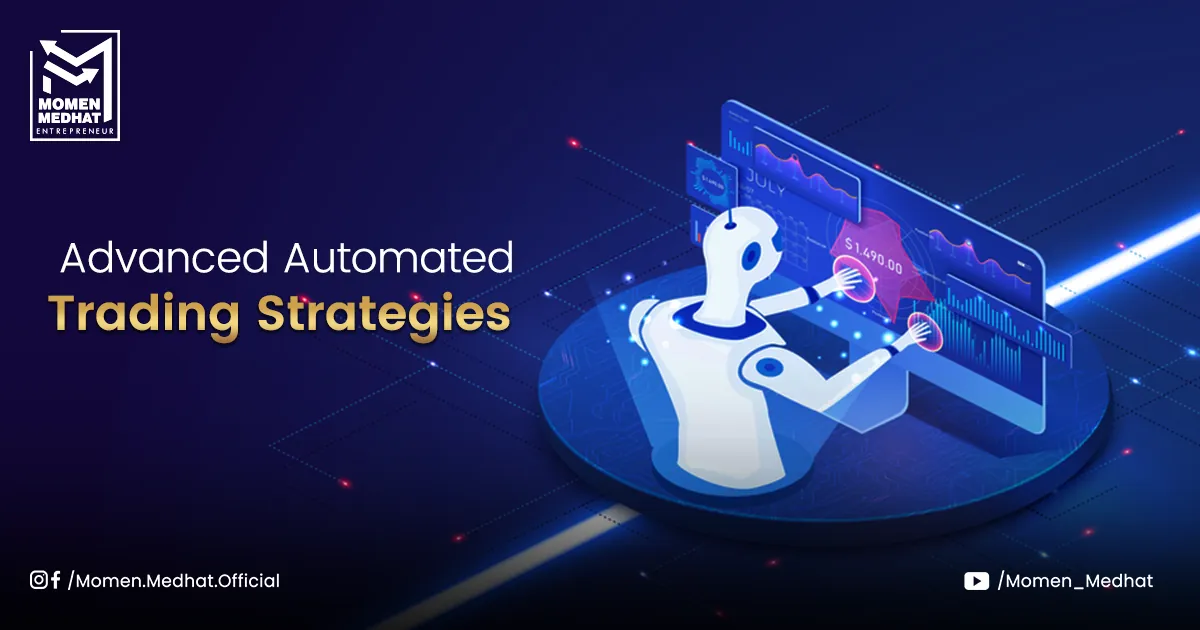
Advanced Automated Trading Strategies and How to Achieve Long-Term Profitability
Hello and welcome to a new article! Today, we’ll talk about advanced automated trading strategies and how to achieve long-term profitability. If you’re interested in forex or financial market trading, you’ve probably heard of automated trading and how it has become a crucial tool for achieving consistent profits over the long term. However, despite its many benefits, not everyone succeeds in maintaining sustainable profitability with it.
This is because numerous factors influence financial markets, such as economic and political fluctuations, making the development of advanced automated trading strategies essential.
In this article, we’ll explore advanced automated trading strategies and how you can use them to achieve sustainable and long-term profits.
- What Are Advanced Automated Trading Strategies?
Advanced automated trading strategies use sophisticated techniques to analyze financial markets and make trading decisions automatically without human intervention.
The main idea behind these strategies is to rely on algorithms that leverage historical and live market data, such as prices, trading volumes, technical indicators, and economic news.
The goal of advanced automated trading strategies is to enhance traders’ profitability over the long term. Hence, advanced tools like machine learning, advanced technical analysis, and complex economic models are utilized. By combining these tools with algorithms, risks can be minimized, and returns maximized.
- Basics of Automated Trading
Automated trading relies on algorithms capable of analyzing data at high speed and making decisions without human involvement. Advanced automated trading strategies employ techniques such as machine learning, artificial intelligence (AI), and data analysis using complex statistical tools.
Tools like deep learning and artificial neural networks allow algorithms to learn from past data and apply it effectively to future scenarios. The ultimate goal is for traders to achieve consistent profits by developing precise strategies that operate in volatile market environments.
- The Importance of Advanced Automated Trading Strategies
Achieving Sustainable Profitability
One of the greatest advantages of advanced automated trading strategies is that they help achieve sustainable profitability. By following precise and advanced strategies, such as machine learning and advanced technical analysis, you can continuously identify ideal market entry and exit opportunities without the need for constant manual monitoring.
Reducing Emotional Impact
Manual traders often face emotional challenges, such as fear and greed, which significantly affect their market decisions. Automated trading, on the other hand, relies solely on data, making decisions more logical and reducing the likelihood of mistakes caused by emotions.
Adapting to Market Volatility
Financial markets are constantly changing, making quick adaptation to these changes essential. Automated systems can adapt to changes much faster than humans. For instance, in the event of sudden market changes, such as economic or political news, automated systems can respond to these fluctuations more swiftly.
- Advanced Automated Trading Strategies
Strategies Based on Machine Learning
Machine learning is one of the most powerful tools in advanced automated trading strategies. By learning from historical data, systems can predict future market movements. Techniques like neural networks, random forests, and logistic regression are commonly used.
For example, these systems can analyze historical market data to identify patterns that precede strong market movements and use these patterns to guide future trading decisions. They adapt to fluctuations, making them better equipped for achieving long-term profitability.
Trading with Advanced Technical Analysis
Technical analysis is a widely used method in automated trading. However, in advanced strategies, it goes beyond traditional methods to include complex models such as the modified RSI, advanced stochastic indicators, and correlation coefficients.
By integrating these indicators with algorithms, systems can pinpoint more precise entry and exit points in the market. This means the system doesn’t merely rely on simple indicators like moving averages but also considers broader market conditions.
Automated Hedging Strategies
Hedging is a key strategy for risk management. In automated trading, hedging is applied using complex algorithms. The idea is to open opposite positions in the same market or related markets to protect against risks.
For instance, if an automated trader opens a buy position in one market, they might simultaneously open a sell position in another related market. This protects the trader from potential losses during significant market fluctuations.
Trading Using Advanced Market Patterns
Chart patterns are crucial tools in forex trading. In advanced strategies, these patterns are analyzed in a more sophisticated and accurate manner, such as triangles, flags, rectangles, and double tops and bottoms.
Advanced automated systems can identify these patterns early, allowing them to interact with the market more quickly and accurately. This means they can enter trades based on these patterns before human traders even notice them.
Trading Using Artificial Intelligence (AI)
AI is one of the most powerful tools in advanced automated trading strategies. AI-based systems learn from data and predict future market movements faster than humans.
Techniques like deep learning are used to analyze complex patterns in historical and live data. The advantage here is that these systems can analyze millions of data points in seconds, making them better equipped to handle significant market volatility.
- Challenges of Advanced Automated Trading Strategies
Programming Complexity
One of the main challenges of using advanced automated trading strategies is the complexity of programming. Designing precise and effective strategies requires advanced programming skills and a deep understanding of financial markets. This can be overwhelming for individuals lacking sufficient technical skills.
Sudden Market Fluctuations
Financial markets can change unexpectedly, sometimes due to economic news or political crises. In such cases, algorithms may struggle to predict or adapt quickly to these changes.
Overfitting
A common mistake in automated trading strategies is overfitting, where algorithms are overly optimized for historical data, making them too specific to past data and unable to adapt to future data effectively.
Conclusion
Advanced automated trading strategies represent the ideal path to achieving sustainable and long-term profitability in financial markets. By integrating technologies like machine learning, advanced technical analysis, hedging, and artificial intelligence, automated trading systems can deliver exceptional performance.
However, these strategies must be flexible and capable of adapting to changing market conditions. Continuous monitoring and performance analysis are essential. Ultimately, automated trading doesn’t mean leaving everything to the system but rather using a powerful tool to make more accurate and faster decisions.
Follow our automated trading learning series on YouTube through this link:
Automated Trading Playlist